top of page
Robility, Inc - WalkSense
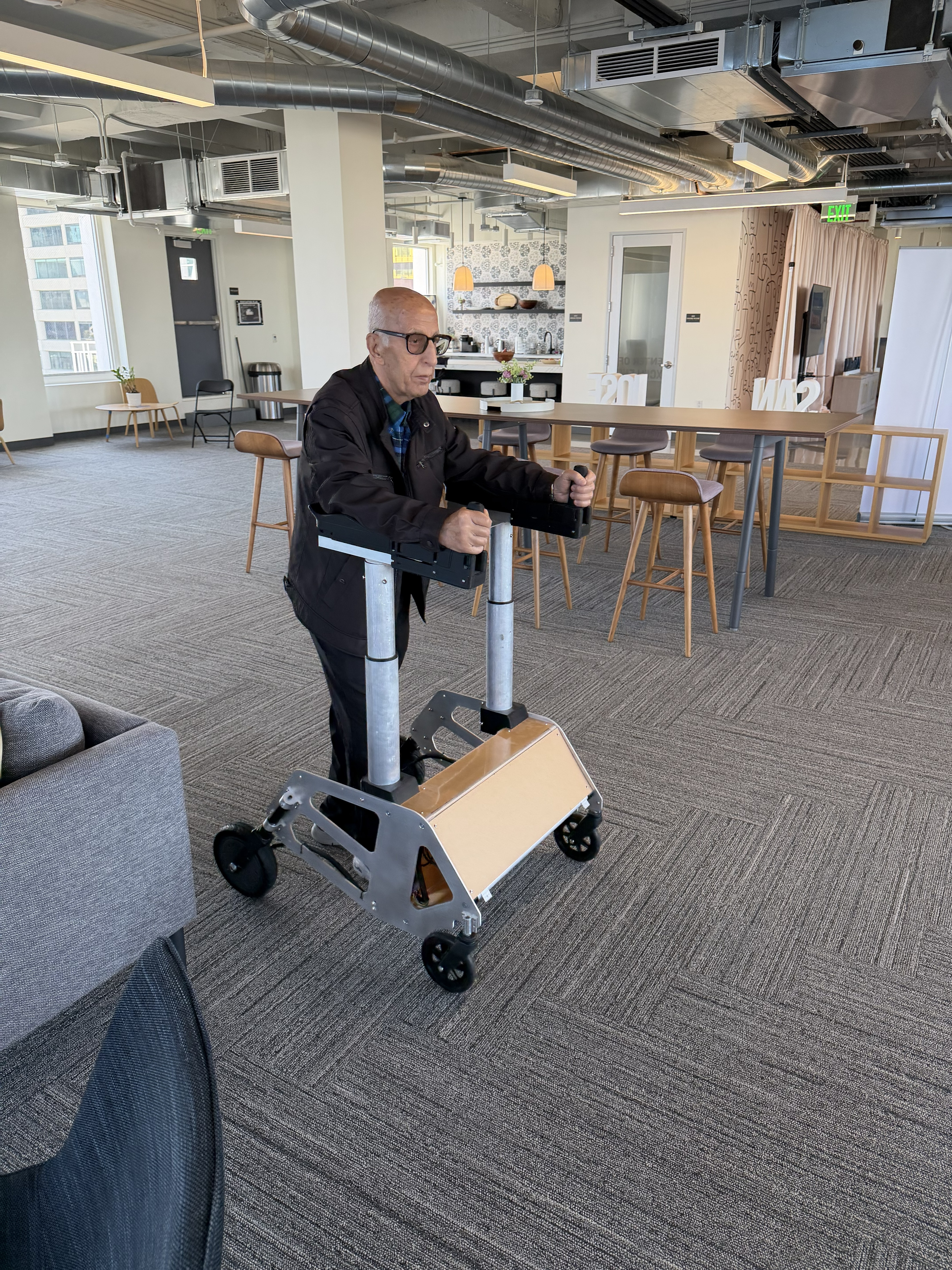
My current work at Robility, Inc. as a Mechatronics Engineering Contractor is developing the WalkSense, a smart robotic rollator style mobility walker. The WalkSense features sit/stand assistance, and motorized walker motion controlled through a force-admittance controller integrated into the user arm supports. Parts were designed in SOLIDWORKS, and 3D printed
Project type
Prototype Hardware Development

01
Robility, Inc - WalkSense
01
User Sit to Stand Powered WalkSense Assistance
02
User Motorized Walk Assistance

03
WalkSense with user

04
Controller circuitry
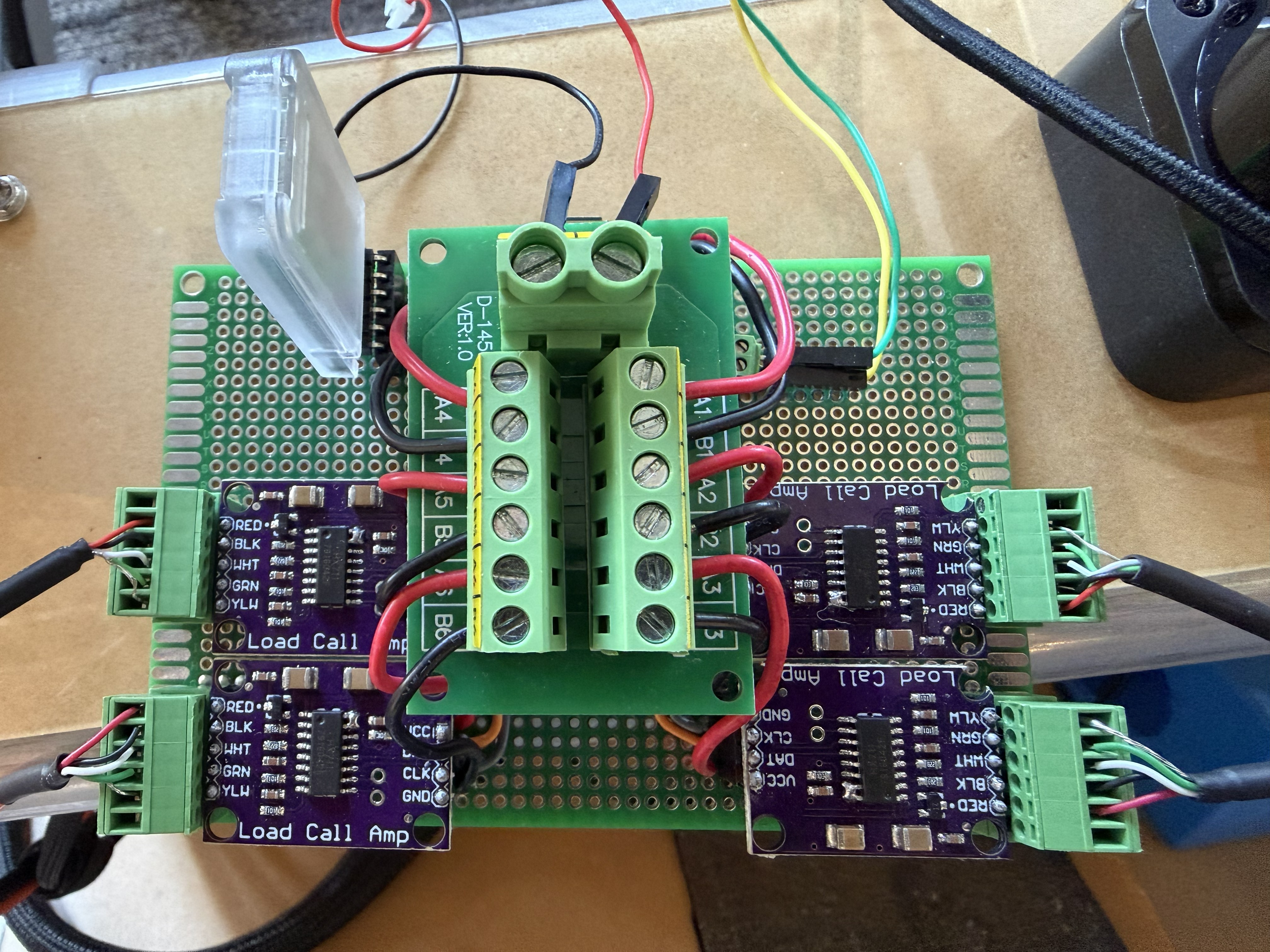
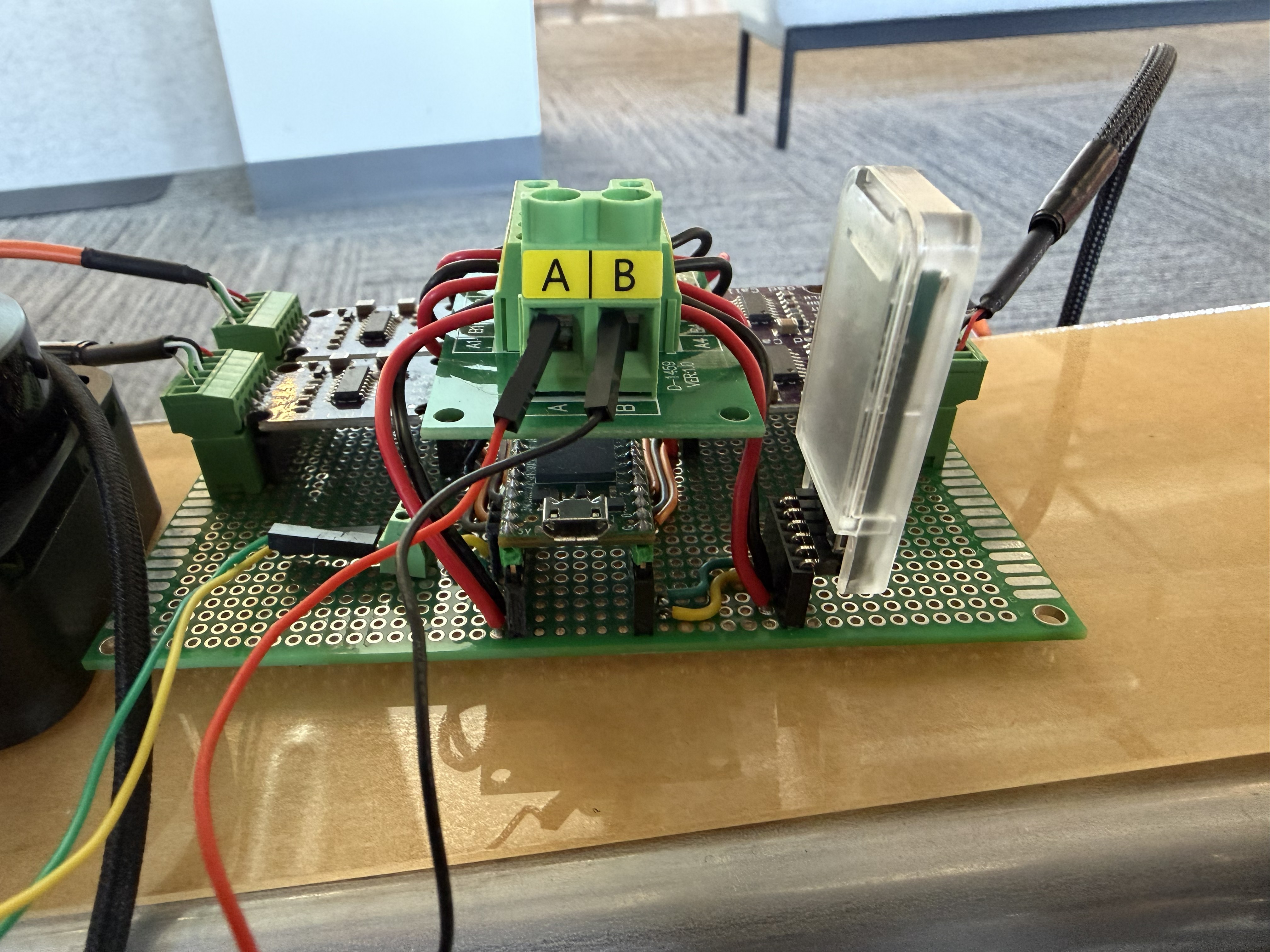
To keep a small form factor with off the shelf parts, the controller circuit was soldered onto a prototype board. The HX711 load cell amplifiers were modified to raise sampling rate to 80Hz. To prevent X-axis and Z-axis load cell sensors from being installed switched, the connectors wire holes were offset relative to the pins of the HX711. In the case of improper installation, an incorrectly installed load cell sensor would not register an induced voltage change, therefore not registering a force input. This was done as the Z-axis sensor is meant to detect amount of body weight applied, and therefore would read as a drastically high force input to the X-axis sensor used to determine user velocity intent

05
Controller circuitry
Circuitry was designed so that all components are rigidly attached through mated connectors or screw terminals to prevent detachment during vibration. All components can be detached for component replacement without desoldering

06
Handle
The handle grip was designed with a plate that would elevate the wrist rest piece above the aluminum extrusion, reducing the amount of friction the arm rest pieces would have with the handle base.

07
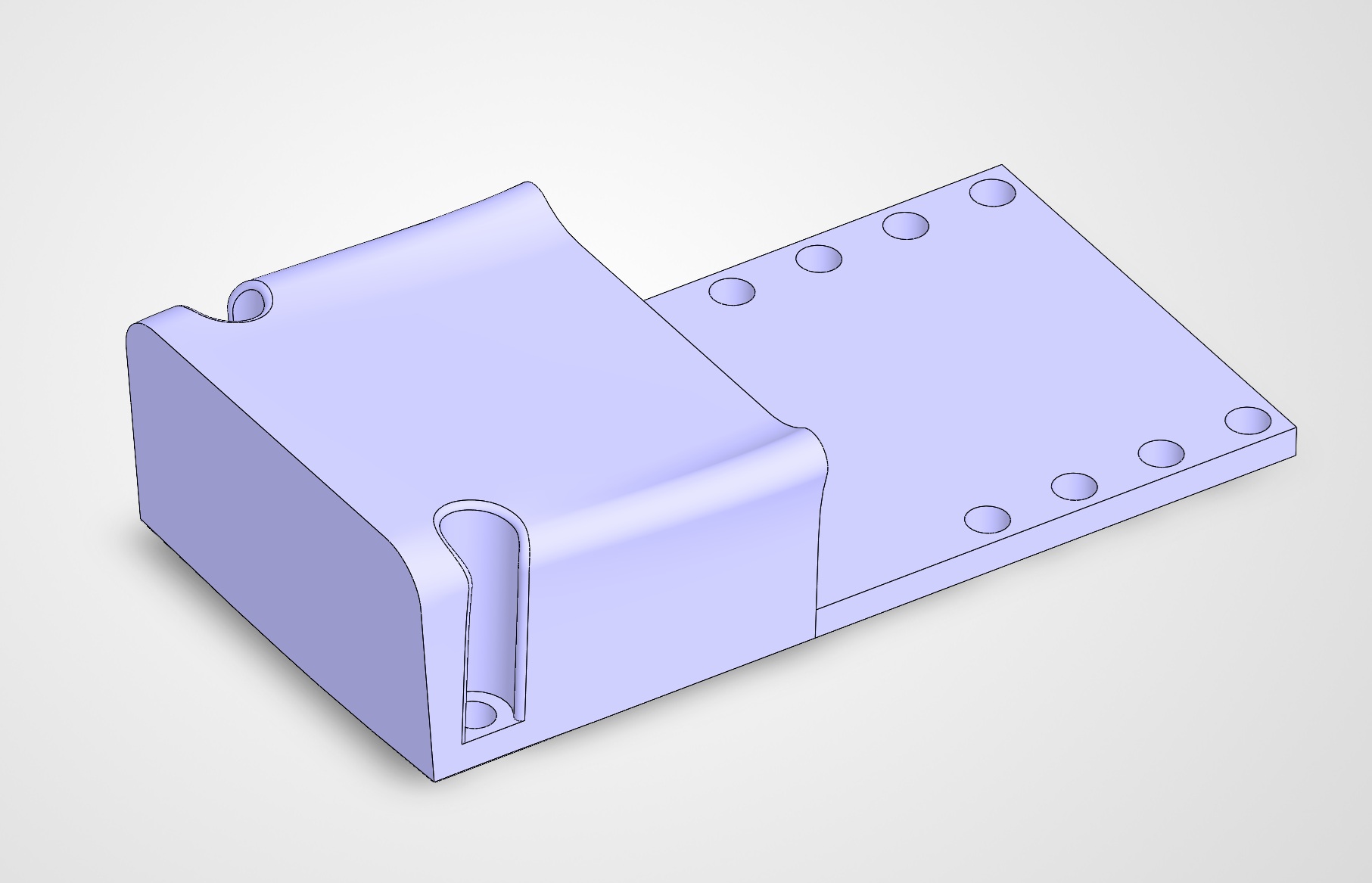
Wrist rest
The part is designed with an open space to allow for the elbow rest pieces to slide over, allowing for customization to suit different forearm lengths

08
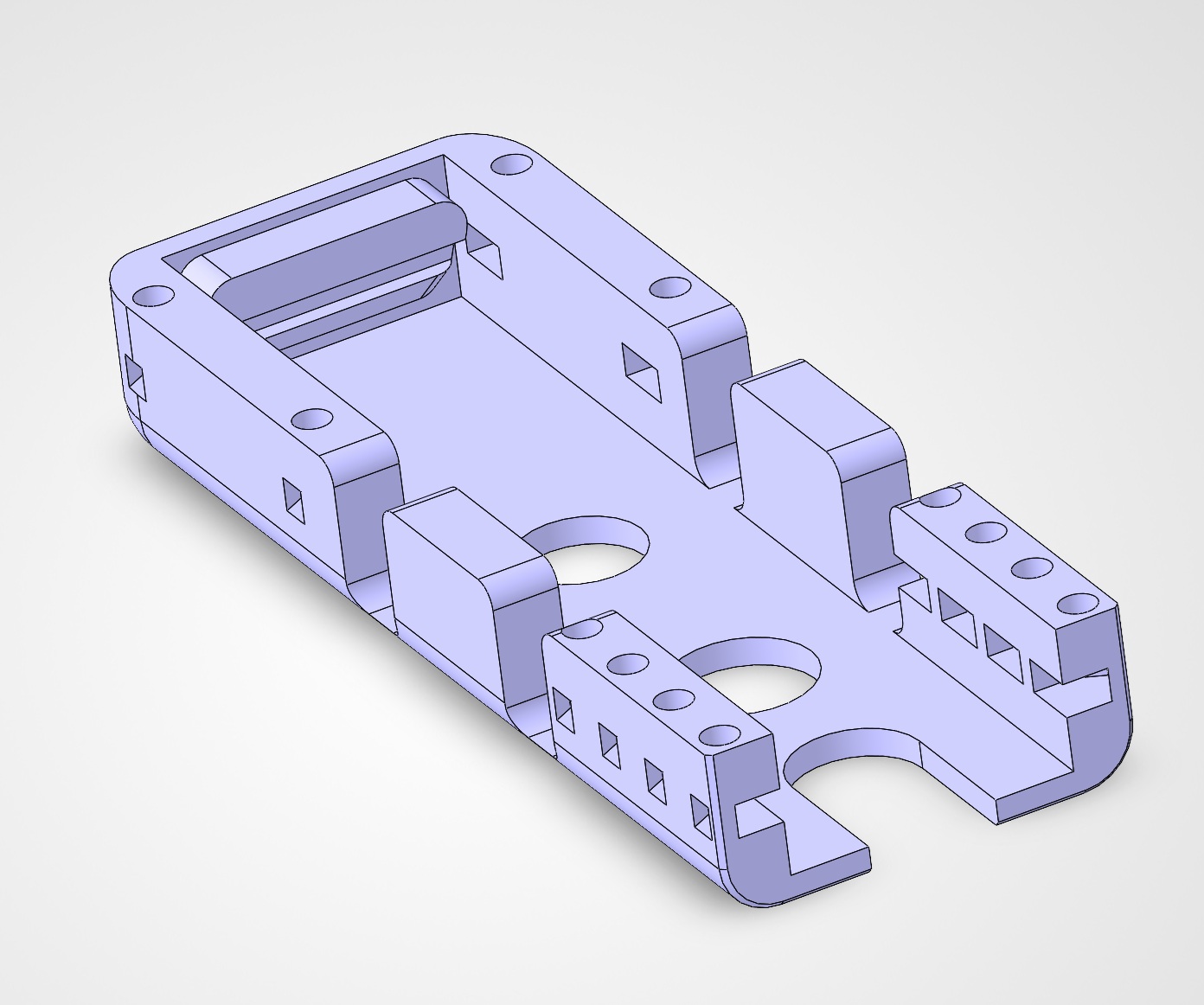
Bottom Shell
The top piece is the bottom shell. The bottom shell is to be installed around the rectangular aluminum extrusion handle base, while also providing access points to screws of the load cell sensor holders. The design constrains forces applied to the user handle in solely the axis of the load cell sensor, while minimizing friction between the aluminum extrusion pieces connected by the load cell sensor. The part is designed for nuts to slide and be held into the part to provide clamping force fixing the bottom shell to the top pieces

09
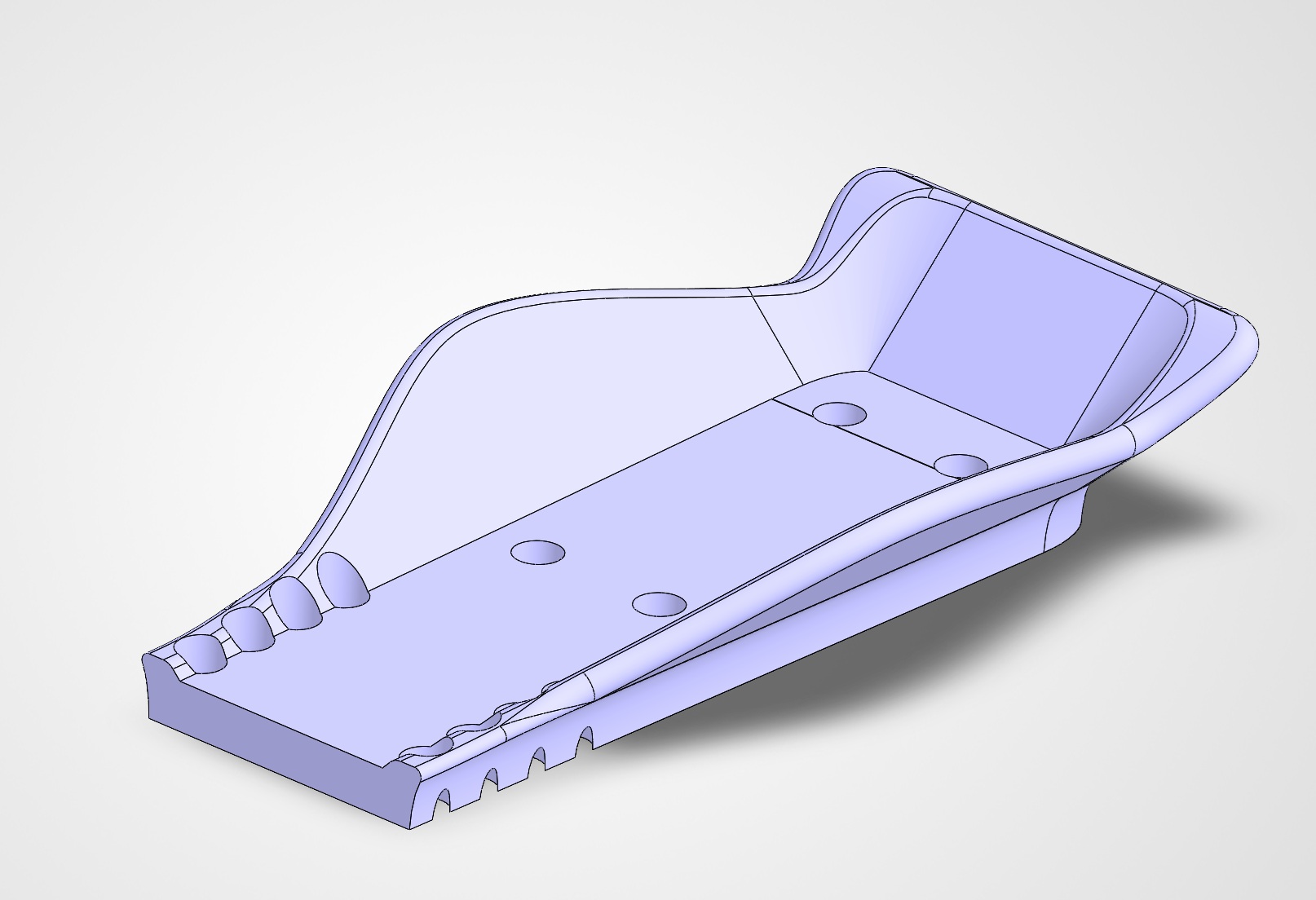
Elbow Rest
The design intent was to comfortably cup the user’s forearm and provide support to prevent the elbow and forearm from sliding during operation. Can be 3D printed with TPU for comfort consideration

10
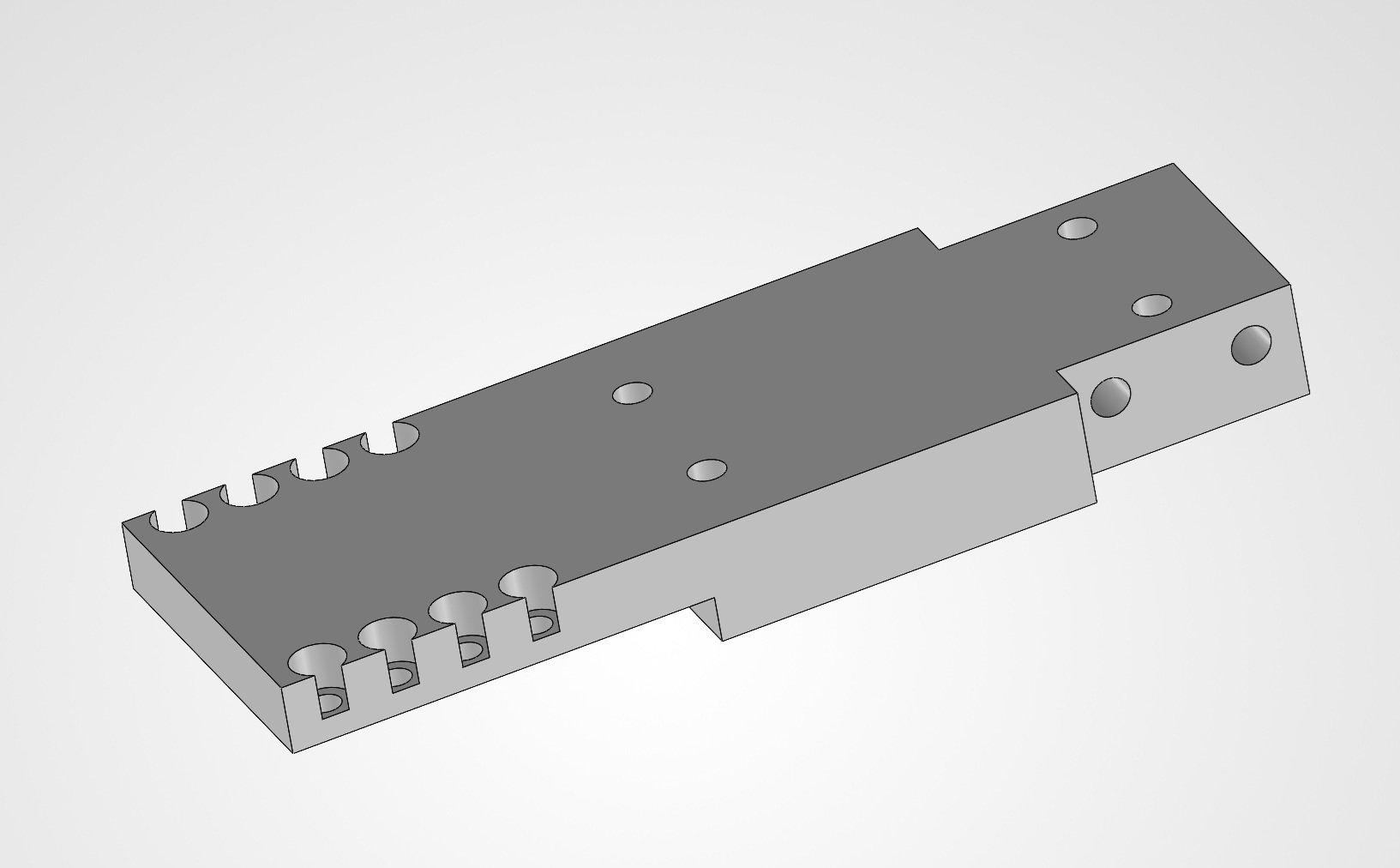
Elbow Rest Base
It is designed to have heat set inserts installed to screw the elbow rest into. This was designed with the intent to allow for multiple versions of the elbow rest to be installed, changing shape and material. The pieces allow for relative sliding between the other parts of the assembly to allow for customization of different forearm lengths.

11
Handle Assembly
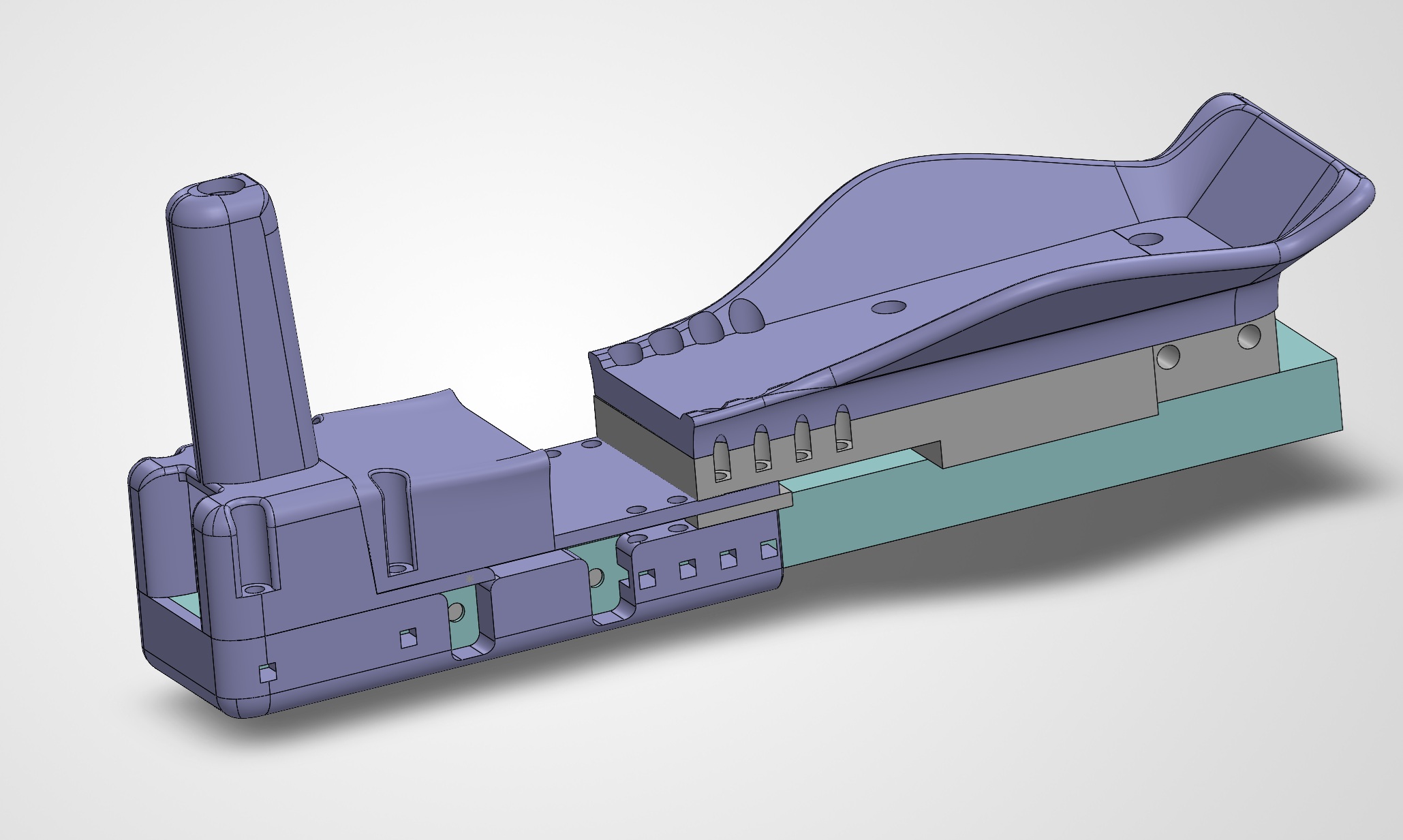
The turquoise components are the aluminum rectangular extrusion pieces

12
3D Printed Components
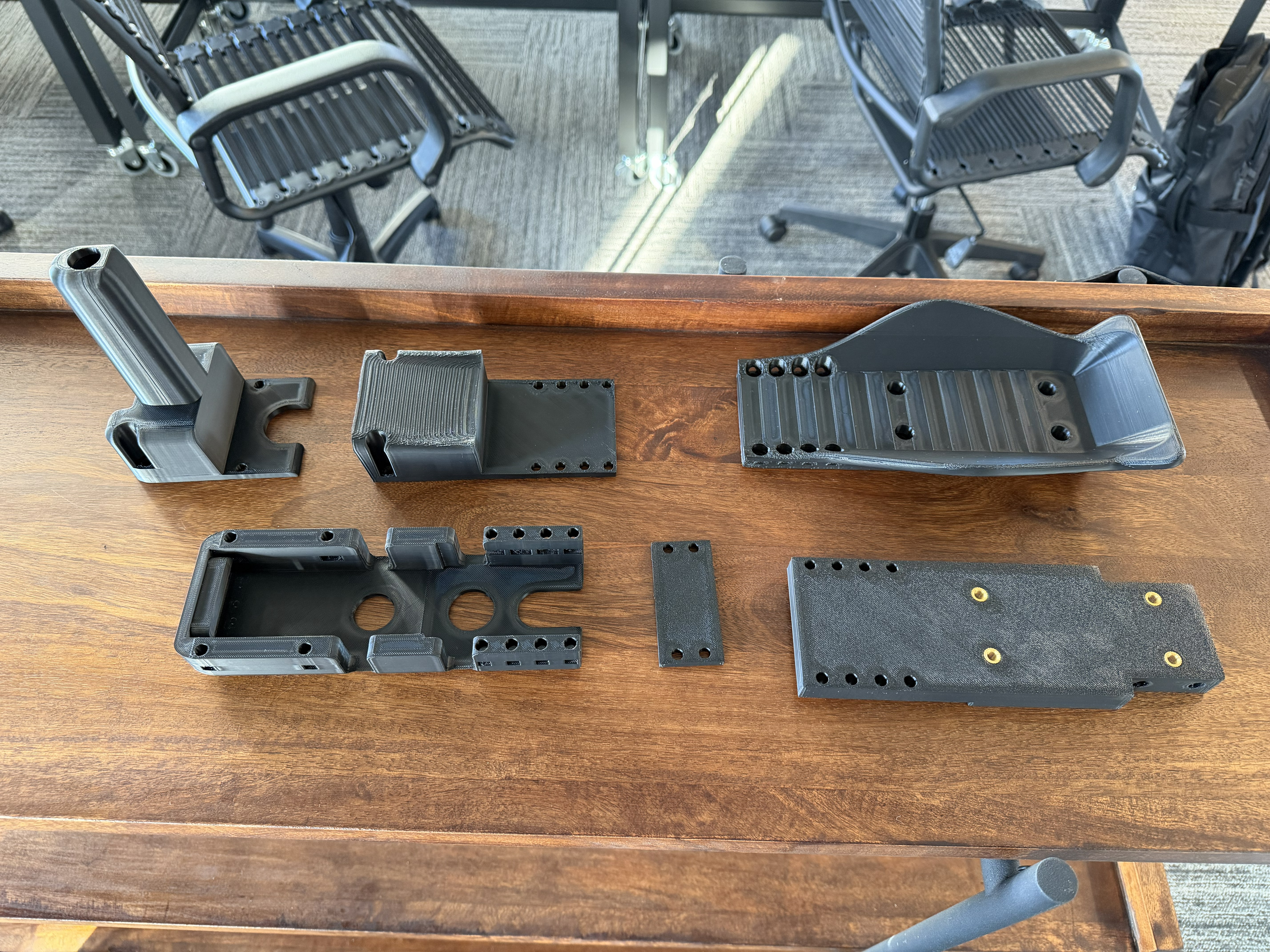
3D printed components in PLA. The heat set inserts had been applied to the elbow rest base piece

13
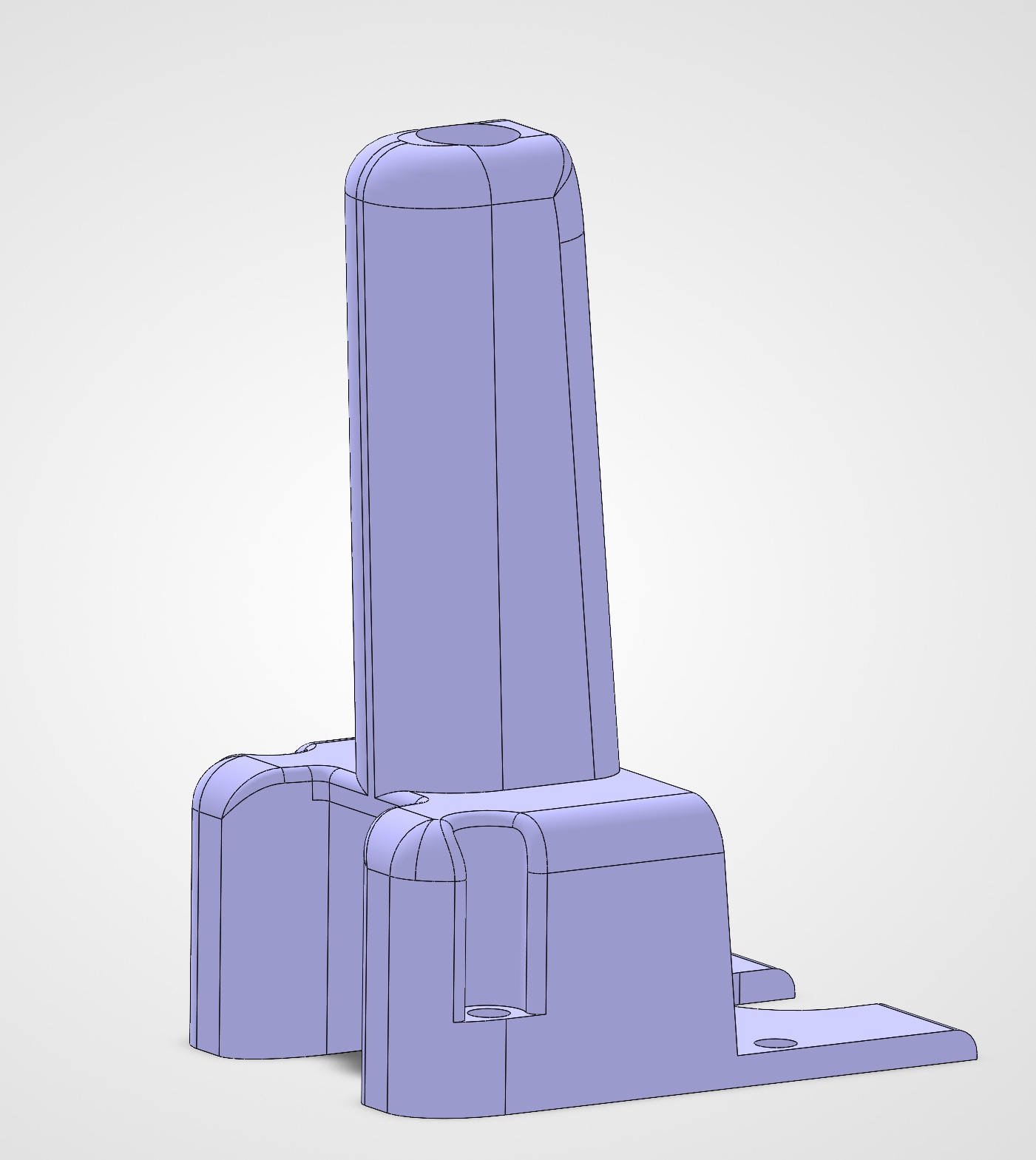
Support Column Holder
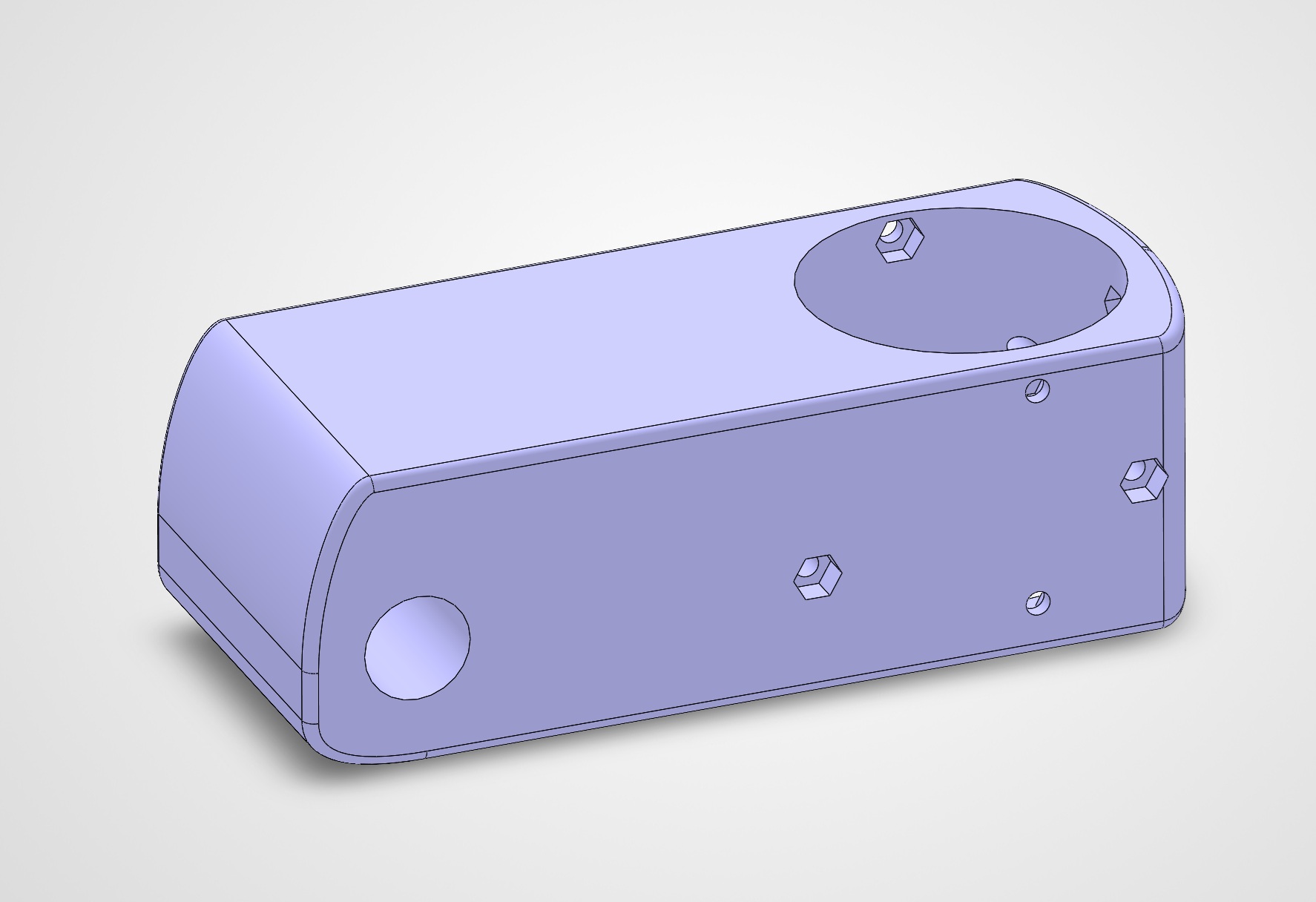
This part is designed to hold the support columns and attach them to the frame of the WalkSense. Cutouts size for M6 nuts are meant for set screw locating purposes, locking position and rotation of the support column tubes
bottom of page